Examining Indian Muslims’ Solidarity from Palestine to Sudan

There's an old Urdu saying: "Apni gali mein toh kutte bhi sher hote hain" (In one's own street, even dogs become lions). This proverb captures something important about human nature—courage and conviction are easiest when they're directed outward, away from uncomfortable truths closer to home. Examining the response of Muslim communities, particularly in India, to different humanitarian crises reveals patterns worth discussing with honesty and respect.
Sudan: The Crisis That Didn't Trend
Since April 2023, Sudan's civil war has killed an estimated 400,000 people, making it one of the deadliest conflicts of our time. More than eleven million people have been displaced, and the country faces what the UN calls the "world's largest hunger crisis". Two famines have been declared, and millions more teeter on the brink of starvation.
The suffering in Sudan is overwhelmingly borne by Muslims. Yet the silence from the global Muslim community has been deafening. Where are the massive street protests? The social media campaigns? The impassioned speeches at Friday prayers?
What makes Sudan's tragedy particularly troubling is the involvement of Muslim-majority nations in perpetuating the violence. The United Arab Emirates has been accused of providing substantial military support to the Rapid Support Forces (RSF), whose attacks have been described as genocidal. An independent inquiry found "clear and convincing evidence" that the RSF and allied militias "have committed and are committing genocide against the Masalit", a Muslim ethnic group in Darfur.
Amnesty International documented that Emirati-made armored personnel carriers and military aid entered Sudan, while Egypt, Saudi Arabia, Qatar, Turkey, and Iran have been backing the opposing Sudanese Armed Forces. In other words, Muslim nations are arming both sides of a conflict that has created the world's worst humanitarian catastrophe.
The Arabic phrase "al-Muslim akhu al Muslim" (a Muslim is the brother of a Muslim) seems to have geographic limitations.
The Palestine Paradox
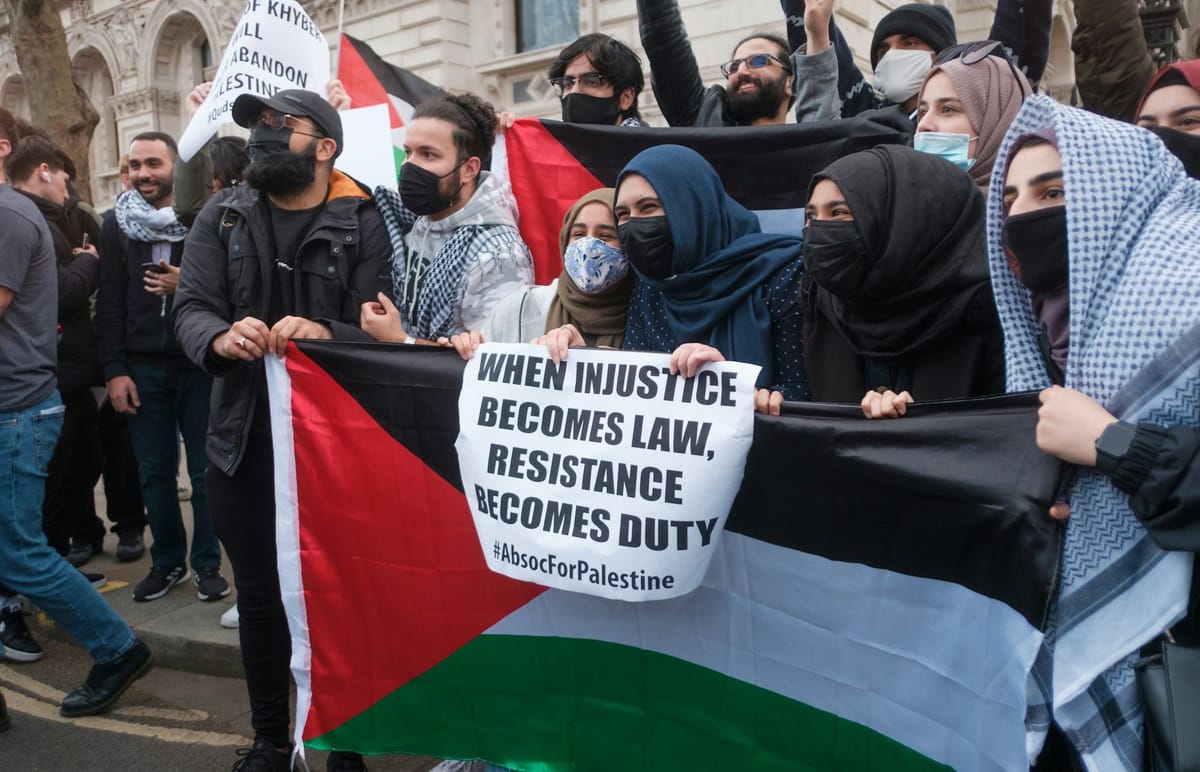
Compare this silence to the response when conflict erupts in Palestine. Streets across India fill with protesters. University campuses become venues for passionate demonstrations. Social media explodes with outrage. The “ummah” awakens and rightfully so, because Palestinian suffering deserves attention and action.
But in here is a the uncomfortable question: Why does this solidarity appear so selective? Are Sudanese Muslims less deserving of brotherhood? Do their deaths count for less because the perpetrators also claim Islam?
The hypocrisy becomes sharper when you consider who's funding Sudan's misery. The same UAE that many Muslims defend on issues of Islamic identity is accused by the UN of establishing weapons channels to the RSF through Libya, Chad, the Central African Republic, South Sudan, and Uganda—all while being a critical hub for gold smuggling, with Sudan's gold flowing to Emirati markets.
The Disappearing Minorities
Let's talk about something even more uncomfortable. The treatment of minorities in Muslim-majority nations, particularly Pakistan and Bangladesh, countries carved out during Partition with the promise of protecting Muslim interests.
In Pakistan, the numbers tell a stark story. At the time of Partition in 1947, Hindus constituted 14.6% of West Pakistan's population. Today? Just 2.17% according to the 2023 census—approximately 5.2 million people. That's a population that should have grown to over 25 million if it had simply maintained its proportion.
Where did they go? The answer involves forced migration, yes, but also something more troubling. According to the National Commission of Justice and Peace and the Pakistan Hindu Council, around 1,000 non-Muslim minority women are forcibly converted to Islam and married off annually, particularly in districts like Tharparkar, Umerkot, and Mirpur Khas.
Pakistani historian Khursheed Kamal Aziz criticized textbooks for being "full of historical errors" and promoting "hatred for Hindus". The Christian population tells a similar story. The 2017 census showed Christians dropped from 1.59% in 1998 to 1.27%, despite natural population growth suggesting they should have increased.
In Bangladesh, the decline is even more dramatic. Hindus constituted 22% of the population in 1951 but had fallen to around 8% by 2022. Between 1974 and 2001 alone, the Hindu population decreased from 13.5% to 8.5%.
Following the August 2024 political upheaval in Bangladesh, the Bangladesh Hindu Buddhist Christian Unity Council reported 2,010 incidents of violence against minorities between August 4-20, including attacks on 69 temples.
Between 2013-2021, there were approximately 3,679 attacks on the Hindu community. These aren't just statistics. They're families destroyed, temples demolished & daughters kidnapped. They represent the systematic erasure of ancient communities that had lived on the subcontinent for millennia before Islam arrived.
The Silence of Indian Muslims
Here's where the conversation becomes particularly relevant to India. When Pakistani or Bangladeshi Hindus flee persecution, when their daughters are forcibly converted—where are the protests from Indian Muslims?
The same voices that rise passionately for Palestine remain conspicuously quiet about persecution happening in their neighboring countries. The same organizations that mobilize thousands for Gaza cannot find a few dozen to stand with Pakistani Hindus or Bangladeshi minorities.
This isn't to say Indian Muslims should be held responsible for atrocities in other countries.But solidarity is supposed to transcend borders, isn't it?
If the pain of Palestinians in distant Gaza can move millions to action, why can't the suffering of Hindus in neighboring Pakistan evoke even a whisper of concern?
The painful truth is that many Indian Muslims who champion the cause of the “ummah” seem to have drawn boundaries around their compassion.
Muslim suffering in Palestine deserves global mobilization. Muslim suffering in Syria, Yemen, and Xinjiang also receives attention. But Muslim suffering in Sudan? Silence. And non-Muslim suffering in Pakistan and Bangladesh? Not even a footnote.
Understanding the Pattern
This isn't about attacking any community but about holding up a mirror to hypocrisy that damages the very cause of universal human rights. The selectivity undermines the moral authority of those who claim to speak for justice.
The Arabic concept of "adl" (justice) is supposed to be universal, applying equally to all humans regardless of their faith. The Quran itself says, "La ikraha fi'd-deen" (There is no compulsion in religion). Yet how do these principles square with forced conversions in Pakistan? With the decimation of minority populations? With silence about genocidal violence in Sudan?
There's a deeper issue here about what it means to be part of a global community. If your solidarity extends only to those who share your religion, and within that, only to those whose oppressors are convenient to condemn—then it isn't solidarity at all. It is tribalism dressed in the language of human rights.
This selective outrage is calculated, strategic, and ultimately hollow.
The Way Forward?
None of this diminishes legitimate concerns about Palestinian suffering or about discrimination Muslims face in India or elsewhere. Those issues deserve serious attention and action. But moral consistency isn't optional. You cannot credibly advocate for justice while turning a blind eye to injustice when it's inconvenient.
Indian Muslims have every right to protest about issues they care about.
But they should ask themselves hard questions: Why do they know the names of Palestinian cities but not Sudanese ones? Why can they recite the casualty figures from Gaza but not from Darfur? Why does the violation of a mosque in Jerusalem spark fury, but the demolition of a temple in Sindh provokes nothing?
The world is watching these silences. Each selective outrage chips away at credibility. Each time you march for one cause while ignoring a parallel one, you reveal that your concern isn't about justice but about identity politics.
The measure of a community's moral strength isn't how loudly it protests when its own are hurt, but whether it speaks up when injustice affects others. True solidarity means marching for Sudanese Muslims being slaughtered by UAE-backed militias with the same passion as you march for Palestinians. It means standing with Pakistani Hindus facing forced conversion with the same conviction as you stand with Kashmiri Muslims.
The challenge to Muslim communities, particularly in India, is simple: prove that your concern is for humanity, not just for your own. Show that "al-insaniyyah" (humanity) matters more than narrow identitarian politics. Raise your voice for those who have no voice, even when the perpetrators claim to share your faith.
Until that happens, the selective silence will continue to echo louder than any protest. And the moral authority so desperately needed to address real injustices will remain compromised by the hypocrisy of caring only when it's convenient.
The question isn't whether you'll agree with this article. The question is whether you'll pause and ask yourself: Am I truly committed to justice for all, or just justice for my own?