Ideological Silences and Selective Outrage: A Delhi University Perspective


There was a time, admittedly naïve, when I believed the university classroom to be a sanctified space: a repository of intellectual equanimity, a site where the “guru” remained an embodiment of integrity and pedagogical fairness.
Coming from a modest background, I had always imagined Delhi University to be the luminous threshold through which I would step into a world of unfettered scholarship. Yet, once I entered the very classroom I had idealised, I found myself confronted with a different theatre altogether–one where ideology often seemed to overshadow inquiry.
The recent uproar surrounding the Vice Chancellor’s remarks on “urban Maoists” did not surprise me half as much as the everyday pedagogy I witnessed within certain Arts classrooms. There is, I regret to observe, a curious relish among some faculty members for intellectual contortions that flatten civilisational nuance.
In a lecture on Indian Classical Literature, a distinguished Parsi professor declared with a dramatic flourish– “Krishna is a playboy.” The remark sailed through the room unchallenged, though muffled sighs and silent discomfort rustled through the benches. Such episodes, I slowly learnt, were not aberrations but patterns.
Equally disconcerting was the spectacle surrounding the invitation of Ruth Vanita, a prominent scholar of gender and sexuality studies. Ironically, she was not opposed for her academic work but for a year-old social media post expressing criticism of Hamas. That some student groups resisted her presence, while the faculty appeared sympathetic to their agitation, raises unsettling questions about the nature of “open inquiry” within our institutions. Meanwhile, certain speakers with openly militant rhetoric have been welcomed as public intellectuals without a flicker of institutional hesitation.
The cultural landscape, too, exhibits its own quiet distortions. A Diwali fest may not be called “Diwali” but “Noor” lest it offend the secular conscience, though injuries directed at one faith seem to fall into the category of trivial academic sport.
In this ideological choreography, select traditions are endlessly interrogated while others are treated with curiously delicate gloves. Even AI systems, now widely deployed in academic research, reflect this skew.
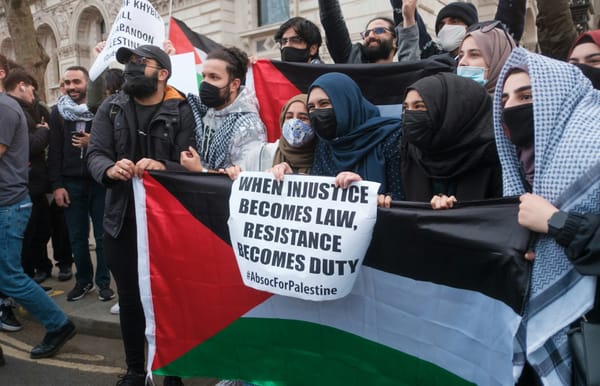
It is not uncommon to ask for neutral scholarly references and find the algorithm repeatedly suggesting a predictable cohort of pro-Palestine or explicitly activist scholars. Whether by design or by the unconscious patterns embedded within training data, the effect is unmistakable: the narrowing of legitimate academic perspectives under the guise of technological objectivity.
The publication ecosystem reflects similar tendencies. It is whispered, almost as common wisdom, that to be embraced by certain journals, one must produce a ritualistic denunciation of the nation-state or at the very least, author articles that fit neatly into the vocabulary of postcolonial self-flagellation. For example, “saffronisation of public knowledge” receives more attention than repeated misuse of ‘minority’ position in the country.
While preparing statements of purpose for foreign universities, students are advised that they should emphasise personal deprivation, marginalisation or some version of being the “slum-dog”, a narrative arc attractive to certain reputed Western institutions.
A particularly inventive device in recent years has been the strategic deployment of the Indian Knowledge System (IKS). Articles and dissertations arrive with neutral, innocuous titles; yet as one ventures into the arguments, one finds an ideological architecture unmistakably reminiscent of the intellectual paradigms championed by Romila Thapar or Irfan Habib.
The fourth-year students, who are bright, impressionable, earnest, become inadvertent carriers of ideas that estrange them from their own traditions. I have seen, with no small measure of sadness, vegetarian students from Brahmin families convinced that their food habits are inherently oppressive, nudged into writing essays that caricature their upbringing as discriminatory.
In some colleges, economically-weaker section Brahmin students report subtle hostility at the time of admission, rehabilitated into acceptability only when they participate in the performative ritual of Brahmin-bashing. These forms of hate mongering are usually peddled by the so-called Buddhist professors who leave no stone unturned in their attempts to abuse these students.
Another troubling pattern is the emergence of small teacher-student coteries who surveil and mock peers holding alternative views, not merely in the classroom but across social media platforms.
The irony is sharp: those who self-identify as “liberal” often exhibit the least tolerance for divergence. The inconsistencies extend into everyday academic life.
Muslim students may receive extensions for assignment submissions during roza, a gesture of respect for religious observance, yet during Navratri, students observing fasts find themselves the targets of casual mockery. The asymmetry is not merely administrative; it is cultural.
Do these practices, I often wonder, constitute the liberalism that the contemporary university so proudly proclaims? Or have we, in the name of intellectual progressivism, merely replaced one orthodoxy with another–less visible, perhaps, but no less coercive?
In raising these concerns, my intention is neither to indict the university wholesale nor to romanticise any particular ideological camp. Rather, it is to call for a return to an ethic of scholarship, where debate is not a performance, where criticism is not selectively applied, and where students are not moulded into ideological foot soldiers but encouraged to think with clarity and courage.
If the university is indeed to remain a sanctuary of learning, it must reclaim its capacity for self-reflection before the classroom becomes merely another battleground where minds are not educated but enlisted.