What Is Your Civilizational Duty?


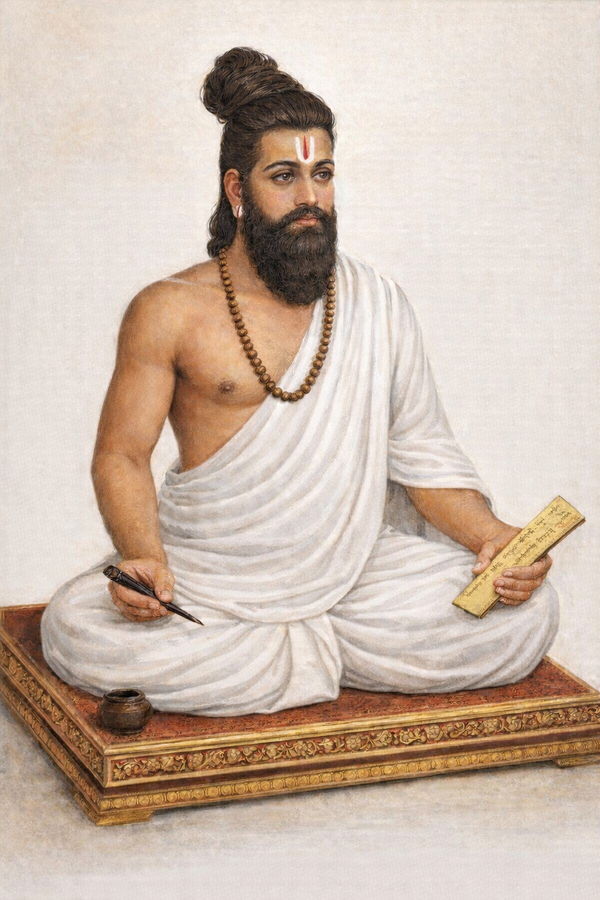
Three generations. That's the architecture of cultural warfare. The first generation fights. They die holding the line, bodies stacked against the doors of temples, manuscripts clutched in burning hands. The second generation preserves. They hide, they record, and whisper stories to their children in the dark in a land ruled by invaders. And the third?
The third generation recovers what was buried.
We are that third generation. The ones who inherited silence and were told to call it peace.
Stalwarts like Sitaram Goel knew this. He spent decades excavating the archaeological records of temple destruction because he realized that someone had to document it. He compiled lists, dates, locations, and evidence that wouldn't get explained away by academic double-speak.
Cultural genocide doesn't end with the invader's departure. The real damage is caused by the natives who internalize the conquest, who learn to see their own civilizational memory through the colonizer's contempt. Thus we have ended up with Indians who can recite European philosophy verbatim but dismiss their own intellectual traditions as "mythology." Generations educated to believe that everything worth knowing came from elsewhere.
The recovery movement isn't merely nostalgia or an attempt to recreate some imagined golden age. It's solely about intellectual sovereignty. We should be looking at the last one thousand years and asking the question nobody wanted us to ask: What happened here? Who did this? And why am I supposed to pretend it didn't matter?
Could it be because they trained you to flinch at your own history? Otherwise, why are you told that investigating your civilizational trauma makes you "communal"? Why are you told that documenting what was destroyed makes you "divisive"?
Why is wanting to know what was there before the mosques and the missionary schools treated as a transgression?
Do you notice how that works? The colonized police their own curiosity. The brown sahibs have internalized the conqueror's narrative so deeply that they attack anyone trying to recover what was lost.
Recovery means reading the texts they said were superstition with the same intellectual rigor you'd apply to any Western philosophy. It means studying temple architecture as high art and not as exotic anthropology. It means treating Sanskrit scholarship as valuable as any classical language and not as some dead relic.
But first you have to see it. And that's what makes people uncomfortable. Seeing requires admitting that what you were taught was incomplete or worse, selective.
Contrary to Marxist belief, the Indigenous Hindu movement isn't asking for special treatment. It's only asking for basic intellectual honesty. Treat our history the way you'd treat anyone else's. Don't romanticize our defeats and pathologize our attempts at recovery. Don't vilify us by calling it "majoritarianism" when we want to study our own tradition in our own universities in our own country.
And let's not be under any illusions. This isn't the work of one lifetime, because recovering a civilization of this magnitude will take centuries. But it starts now, with looking directly at what was lost, naming who took it, and refusing to accept that history only belongs to whoever wrote it down last.
You don't have to hate anyone to acknowledge that, nor do you have to become what you're fighting against. You just have to stop pretending that recovering what was lost is somehow more aggressive than the erasure that created the loss.
We are the generation that recovers. Not because we're angry—though we have every right to be—but because we refuse to hand our children the same severed inheritance we received. A civilization that doesn't know its own history is just geography waiting to be colonized again.
Every generation has a responsibility. This one is ours.